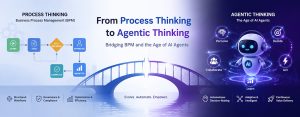
Agentic AI in IT Staffing: 52% of Execs Are Already Deploying — Is Your Team Ready?

The AI Agent Tipping Point
Something shifted in Q1 2026 that most companies haven’t fully processed yet.
According to data published by leading enterprise research firms this spring, 52% of executives are already deploying agentic AI tools in some part of their operations. Not piloting. Not evaluating. Deploying. That number was 18% eighteen months ago.
The companies in the other 48%? Some are planning carefully. But a lot of them are just slow — and in a market where AI-fluent engineers are already scarce, slow has a cost.
Agentic AI isn’t the ChatGPT moment people got excited about in 2023. It’s quieter and, frankly, more disruptive. These systems don’t just answer questions. They execute tasks, make decisions within defined parameters, and loop back when they need human input. In IT staffing, that means a recruiting tool that doesn’t just surface candidates — it reaches out to them, schedules screens, and flags anomalies in résumé patterns without anyone clicking a button.
Your teams are operating in an environment that’s being reorganized around this shift. The question isn’t whether to engage with it. It’s whether you’re building the team that can work alongside it.
What ‘Agentic AI’ Actually Means for IT Teams
The term is getting muddied fast, so let’s be specific.
An AI agent is a system that can take a goal, break it into steps, execute those steps using available tools, and adjust its approach based on what it encounters — without a human scripting every move. It’s not a chatbot. It’s not an autocomplete. It’s closer to a junior employee who can be handed a project and trusted to run it to a defined checkpoint.
For IT teams, this shows up in a few concrete ways: automated code review pipelines that flag issues before they reach a human reviewer, infrastructure monitoring agents that detect anomalies and open remediation tickets, and data pipeline managers that self-correct when upstream data quality drops.
None of this eliminates the engineers. What changes is what those engineers spend their time on. The engineers who thrive are the ones who understand how to configure, supervise, and course-correct these systems — not the ones who are doing the repetitive work the agents now handle.
The 52% Statistic Unpacked — What Early Adopters Are Doing
Early deployers aren’t necessarily the biggest companies. Some of the most aggressive adopters are mid-market firms in financial services and healthcare IT — industries where compliance pressure creates an enormous appetite for reliable process automation.
What they’re actually building: AI agents that handle tier-1 IT support tickets (resolving up to 60% without human escalation in the best implementations), agents that manage vendor invoice reconciliation, and agents embedded in CI/CD pipelines that run pre-deployment compliance checks.
The pattern across all of them is the same. They started with one high-volume, low-stakes process. Got it working. Built the internal knowledge to manage it. Then expanded. Nobody went from zero to full agentic operations overnight.
The companies getting this right aren’t the ones who bought the most expensive AI platform. They’re the ones who hired two or three people who genuinely understood how to configure and oversee these systems.
New Roles Emerging: AI Workflow Architect, AI Ops Lead, Prompt Engineer
Three titles that barely existed 18 months ago are now among the most searched in enterprise IT hiring.
The AI Workflow Architect designs the task decomposition logic — deciding what a multi-agent system should handle autonomously versus escalate to humans and building the feedback loops that keep the system from drifting. It’s a blend of systems engineering, process design, and risk thinking.
The AI Ops Lead is operationally focused. They monitor agent performance, manage the tooling layer, and own the relationship between the AI systems and the human teams working alongside them. Think of it like a DevOps role, but the system being managed is agentic.
Prompt Engineers — the title that got a lot of hype early — are evolving into something more sophisticated. The best ones now write structured workflows and evaluation frameworks, not just better prompts. The skill ceiling is much higher than the job title suggests.
These roles don’t exist in large numbers yet. That’s exactly why companies that need them are struggling to find them through generalist recruiters who’ve never seen the role before.
How to Hire for AI-augmented Teams Today
Stop writing job descriptions that ask for 5 years of experience in tools that are 2 years old. It signals to strong candidates that you don’t understand what you’re hiring for.
What actually matters: demonstrated work with production of AI systems (not research, not demos), comfort with ambiguity at the system level, and the ability to evaluate AI outputs critically rather than accept them uncritically.
Practically, this means asking candidates to walk through a project where they built or managed an AI-assisted workflow. What were the failure modes? How did they detect them? What would they do differently? These questions surface real experience instantly. Candidates who’ve actually done the work answer differently than those who’ve read about it.
Skills-based screening matters more here than anywhere. There’s no standard credential yet. The people who have genuinely built in this space often have nontraditional backgrounds — philosophy majors who learned to code, infrastructure engineers who got deep into ML systems, product managers who built AI evaluation frameworks. Degree-first filtering will cost you the best candidates.
PamTen’s Approach to AI-fluent Talent Matching
PamTen screens for AI fluency as a core competency in every technical role, not a specialization filter. That means evaluating prompt engineering awareness, hands-on experience with AI-assisted tooling, and the ability to work in workflows where AI and human judgment share the decision-making space.
Our recruiting team works from a 200,000+ contact network built over 15 years — and increasingly, the candidates we’re placing in AI-adjacent roles came through our existing relationships, not job board applications. The engineers building real things with agentic systems aren’t browsing job boards. They’re heads-down in their work.
For clients starting to build out AI-capable teams: brief us on your technology roadmap, not just your open headcount. Knowing that you’re moving toward autonomous infrastructure monitoring in Q3 tells us which relationships to activate in Q2.
The Bottom Line
52% of executives deploying agentic AI in 2026 isn’t a trend story. It’s a workforce restructuring in progress. The roles it creates are real, the skill sets are identifiable, and the companies that staff for this reality now will have a meaningful advantage over those that treat it as a 2027 problem.
Your team is either building the capability to work alongside these systems, or it isn’t. There’s not much middle ground left.
Ready to build an AI-fluent IT team? Talk to PamTen’s specialist recruiters — pamten.com or 888-344-9837.
FAQs
Q1: What is an AI agent in the context of IT staffing?
+
An AI agent is software that runs multi-step tasks on its own — scheduling, code review, candidate screening — without someone hovering over it the whole time. In IT staffing, agentic tools are now handling sourcing, shortlisting, and initial outreach. The humans’ step in when judgment is needed, which is most of the interesting work.
Q2: Do I need to hire AI specialists to use agentic AI tools?
+
Not necessarily. Most enterprise agentic tools are built for operational teams. What you need is staff with enough AI fluency to supervise outputs, understand how agents work, and know when to override them. That’s different from building AI — but it’s the skill set that matters for most companies right now.
Q3: How does PamTen screen candidates for AI fluency?
+
AI proficiency is part of every technical screen. We look at prompt engineering awareness, comfort with AI-assisted workflows, and hands-on familiarity with tools like GitHub, Copilot, ChatGPT, and other automation platforms relevant to the role. We’re not looking for people who have read about AI — we’re looking for people who use it daily.
Q4: Is agentic AI replacing human IT workers?
+
No. It’s changing what they focus on. Agentic AI handles repetitive, structured tasks. Engineers focus on architecture, judgment, security, and problems that don’t have clean answers. The companies doing best in 2026 are building Human+AI teams, not choosing one over the other.